French education in CambodiaSiem Reap · Cambodge
French educationSiem Reap

Learning · Languages · Culture

A French education.
A Cambodian horizon.

Explore French schooling in Siem Reap: the curriculum, the place of languages and the story of a school rooted in Cambodia.

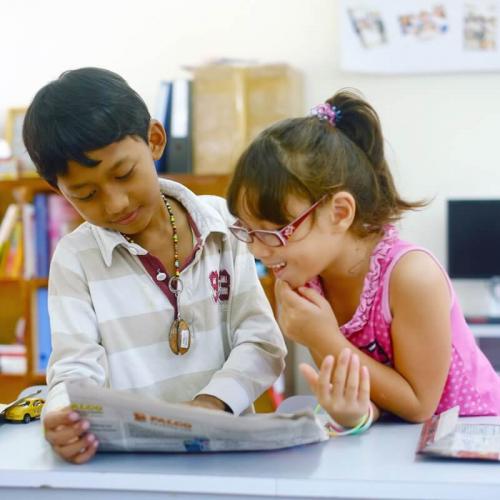
Pupils reading together at the French School of Siem Reap
At the heart of Siem ReapA meeting of languages, learning and cultures.
01
French curriculumUnderstand the educational approach
02
Three languagesFrench, English and Khmer
03
A local connectionDiscover Cambodia through learning

The educational approach

Understanding the
learning journey.

From first discoveries to greater independence, explore the main stages of a French education and the role of language learning in an international setting.

01 / Early years

Language, play and discovery

A child’s first school experience builds confidence in speaking, learning together and exploring the world. French-language support helps children joining from other language backgrounds build the confidence to take part.

Read more
02 / Primary school

Foundations for what comes next

Reading, writing, mathematics and discovery of the world form the core of the French curriculum. English and Khmer add a connection to an international setting and local life.

Read more
03 / Beyond primary

Continuity and independence

The school’s history describes the development of secondary education and supported distance learning. Families can use these reference points to frame questions about their child’s next stage.

Read more

A story that began in 2003

French roots.
Open to the world.

Opened in September 2003, the French School of Siem Reap developed around French-language education in a Cambodian setting. Language learning, cultural discovery and growing independence have shaped that educational journey.

Discover the school’s story ↗

Three languages, three connections

French, English and Khmer each bring a different dimension to education in Siem Reap. French provides the language of the curriculum: children use it to explain ideas, develop their reading and build subject knowledge. English connects learning with a wider international environment. Khmer creates a direct relationship with the country in which children live, from everyday conversation to a growing understanding of local culture.

The EFSR educational programme developed these connections through early language learning and selected subjects taught in English. Its approach linked language with something children could investigate, describe or discuss. For families, this makes the language journey an important part of understanding the whole school experience. Explore the place of French, English and Khmer in more detail.

Finding your way through the French school system

The French names for school stages become easier to understand when they are connected to a child’s daily learning. Maternelle is the early-years stage, where language, play, movement and shared routines support a child’s first steps in school. Élémentaire follows with five year groups: CP, CE1, CE2, CM1 and CM2. Reading and writing develop alongside mathematics, exploration of the world and increasingly independent work.

Collège is the next stage, leading towards lycée. The school’s development in Siem Reap included both classroom teaching and supervised distance learning, creating ways for families to continue a French educational pathway as their children grew. Our school history follows that development from the opening in 2003 through parent-association management and the expansion of the educational project.
A useful starting point for families

A school choice brings together a child’s learning, language confidence and everyday life. Begin with the experiences your child already enjoys: stories, practical activities, sport, music or working with friends. Then consider the routines and support that help them settle into a classroom. A child joining from another country may be adapting to new surroundings at the same time as developing a new language.

During a school visit, talk through a typical day. Discuss how lessons move between individual work, group activities and play; how language learning fits into the timetable; and how teachers share progress with families. Bring recent school reports and a short account of your child’s previous learning. These details give the conversation a clear starting point and help you picture the transition into school life in Siem Reap.

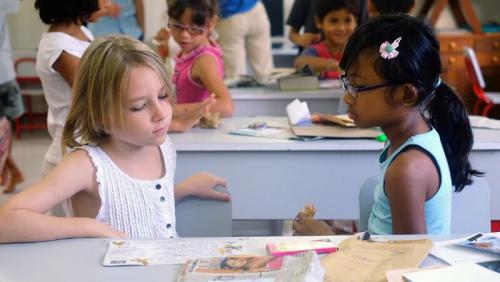
Conversation and learning together
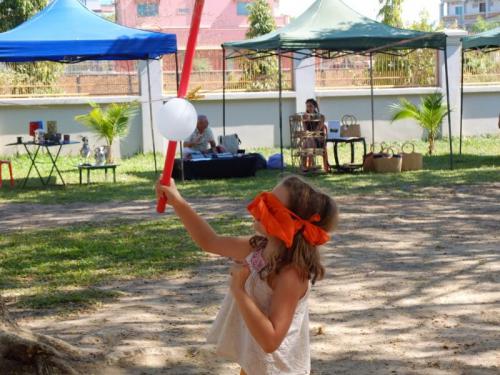
Games in the school grounds

Before you go further

A few useful
starting points.

How do the French year-group names fit together?

Maternelle covers petite, moyenne and grande section. Primary school then runs through CP, CE1, CE2, CM1 and CM2, followed by collège and lycée. The educational-offer page explains the learning journey and the place of languages along the way.

How can a child develop confidence in French?

Familiar stories, songs, conversation and shared classroom activities give children repeated opportunities to use French with a purpose. Discuss your child’s existing languages and interests during a school visit so that the conversation starts with their experience.

What should families discuss at a school visit?

Talk about the daily timetable, the class matching your child’s previous schooling, language support, activities and communication with teachers. Bring school reports and a note of the languages used at home and in previous classrooms.

What makes the school’s story distinctive?

The school began with an initiative by two families in 2003. Parent-association management followed in 2008, and the educational project grew to combine a French curriculum with English, Khmer and a connection to Cambodian life.